

When your sewer line blocks, wastewater has nowhere to go, so it backs up and comes out of the lowest point in your plumbing. That can mean showers filling with dirty water, floor drains overflowing, toilets bubbling or rising, and sewage spilling from outdoor overflow points. Because it's wastewater, a blocked sewer in Sydney should be dealt with quickly and properly to limit the mess, the smell and the health risks. Stop using water, keep people and pets away from the spill, and call a licensed plumber. Sydney Drain Surgeons provide sewer drain clearing, CCTV inspections and repair options to get your system flowing again.
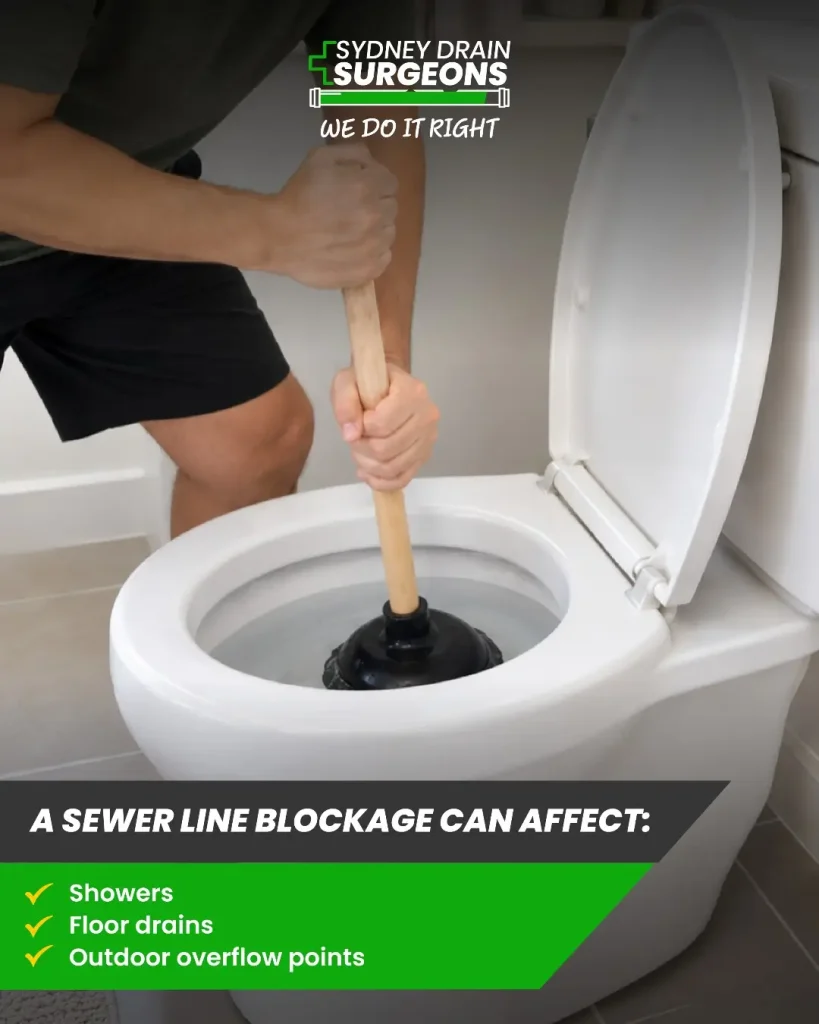
sewer line blockages issue
Your sewer line is the main pipe that carries all the wastewater from your home, from toilets, showers, basins, the kitchen and the laundry, to Sydney Water's network. Everything joins it. So, when it blocks, the effects spread. A blockage usually builds over days or weeks, then reaches a tipping point.
1. Early warning signs. Drains slow down, toilets gurgle, and you get an odd smell. It's easy to put it down to a one-off clog.
2. The flow reduces. More wastewater arrives than can leave. Several fixtures start draining slowly at the same time.
3. Water looks for the lowest exit. With nowhere to go, wastewater rises through the lowest outlet in the house, such as a ground-floor shower, a floor drain or a toilet.
4. It reaches the overflow points. Outdoors, it can rise or spill from the gully trap or overflow relief gully, which is designed to let overflow escape outside the house rather than back through your fixtures.
5. Mess, smell and contamination. Wastewater spreads across floors and into walls, carpet and cupboards.
6. If it's ignored, the damage compounds. Blockages put pressure on joints and can worsen cracks or sagging, and a pipe that keeps blocking may be damaged or invaded by roots.
A sewer line blockage can affect showers, floor drains and outdoor overflow points. The table shows what to look for.
| Where | What you'll see | Why it happens |
| Showers and baths | Dirty water pooling around your feet, slow draining, or gurgling when another fixture is used | Often the lowest fixture in the house, so it's the first to fill |
| Floor drains and floor wastes | Water or sewage rising in the bathroom or laundry floor drain | Direct connection to the sewer, with no trap or fixture to hold it back |
| Toilets | Bubbling, slow flushing, or water rising towards the rim | Air and water pushed back up the pipe |
| Laundry and sinks | Slow drains, water backing up when the machine empties | Shared branch drain with the main line |
| Outdoor overflow points | Water or sewage in the gully trap or overflow relief gully, or around an inspection opening | The overflow is designed to escape outside the house |
| Yard | Soggy ground, sewage smell, or an unusually green patch | A leaking or broken pipe |
One slow drain is usually a simple clog. The pattern is what matters. If several fixtures are affected, or the problem returns after clearing, the main line is the likely culprit. Try our drain problem checker if you're not sure.
Sewage isn't just unpleasant. According to Victoria's Better Health Channel, it can carry harmful bacteria, viruses and protozoa, and direct contact with sewage or contaminated surfaces can cause illness such as gastroenteritis. If areas stay damp, mould can follow. That's why a sewer overflow isn't a wait-and-see job.
The longer the water sits, the more it soaks into porous materials such as carpet, plasterboard and soft furnishings, and the harder it is to clean. Speed matters.
Wipes don't break down like toilet paper, and they snag on anything rough in the pipe.
Roots enter small cracks and loose joints in older pipes, then grow into a thick mat that catches waste. Read more about how tree roots get into sewer pipes.
Poured down the sink, fat cools and hardens on the pipe walls, then combines with wipes and other waste to form fatbergs.
Cracked, displaced or sagging pipes hold water and waste. Older clay and cast iron pipes are the usual suspects, and collapsed pipes block the flow altogether. See our guide to the signs of a collapsed sewer line.
If your sewer backs up mostly during storms, ask a plumber to check where your downpipes go. Our blocked drains services in Sydney include tracing where each downpipe goes.
Occasionally the blockage is in Sydney Water's pipes, not yours. More on that below.
1. Stop using water. Don't flush, run taps, shower or use the washing machine or dishwasher. Every drop adds to the overflow.
2. Keep people and pets away. Children and animals especially should stay clear of the affected area.
3. Protect yourself. Wear gloves and boots if you need to go near it, and wash your hands well with soap and water afterwards.
4. Switch off power if water is near electrics. Do it at the switchboard, or call an electrician.
5. Contain what you can. Move rugs, shoes and valuables out of the way, and keep doors to affected rooms closed.
6. Take photos. They help your plumber, and your insurer if you claim.
7. Call a licensed plumber. Tell them which fixtures are affected, whether there's an overflow outside, and when it began.
8. Check whether neighbours are affected. If they are, or sewage is overflowing in the street, call Sydney Water on 13 20 90.
Sewer relining in Sydney is a no-dig repair. A flexible liner soaked in epoxy resin is pulled into the old pipe, inflated against the walls and left to cure, creating a smooth, jointless pipe inside the old one. It seals cracks and joints, shuts out tree roots, and avoids trenching through your garden, driveway or slab. Our pipe relining in Sydney page explains the process in detail.
A trustworthy plumber will tell you which case you have from the camera footage, and will explain the options before any extra work starts. If digging is the only option, we'll say so.
You can't stop old pipes ageing, but you can cut the odds of a blockage a lot.
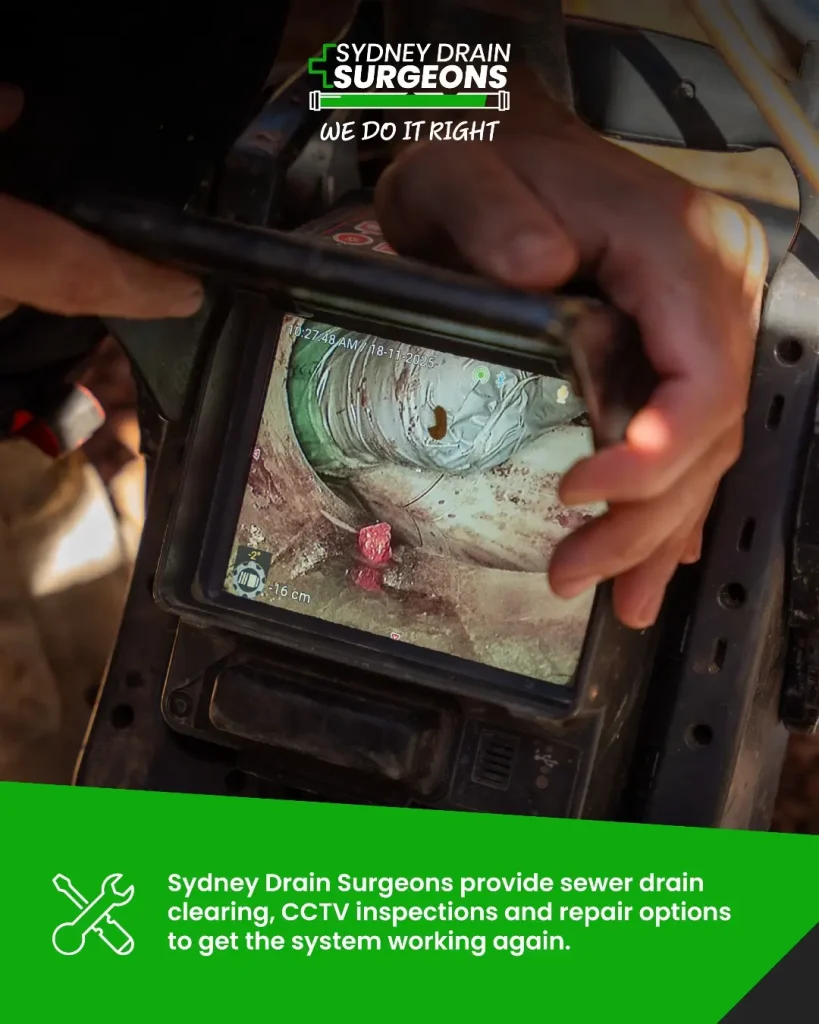
CCTV inspection in Sydney
A blocked sewer in Sydney doesn't get better with time. Call 02 9158 3564 for fast help with sewer drain clearing, CCTV inspections and repairs, or request a free drain inspection quote.