

If only one drain is blocked, the problem is usually local: a clog in that fixture's own pipe, caused by hair, grease, soap scum or a stray object. If the blockage keeps coming back, or you notice gurgling, smells or slow drains elsewhere, it can point to a deeper problem in your main drain line, such as tree root intrusion, a cracked pipe or a collapsed section. The most reliable way to tell the difference is a CCTV drain inspection, which shows exactly what's happening inside your pipes without any digging.
If you're dealing with a blocked drain in Sydney and aren't sure which category you're in, you’re in the right place. We'll walk you through the warning signs, the likely causes, and what to do next.

A small blockage means a bigger problem
A drain system is like a family tree. Every sink, shower, toilet and laundry has its own small branch line. Those branches join up to a larger main drain, which carries wastewater out of your property and to the council or Sydney Water network.
That layout is why the location of the blockage matters so much:
Let's look at each possibility in more detail.
This is the best-case scenario, and the most common. Typical culprits include:
If a plunger or a gentle clean of the trap clears it and it stays clear, you've probably dodged a bullet.
If the drain clears briefly and then clogs again within days or weeks, the issue may be further along that branch. Pipes that are cracked, misaligned or sagging create a spot where waste pools and builds up, so every blockage after that happens faster.
Tree roots are one of the most common causes of recurring blocked drains in Sydney. Roots naturally grow toward moisture and nutrients, and a tiny crack or loose joint in an old clay or concrete pipe is a very attractive target. Once they get in, they grow, trap debris and eventually choke the pipe.
Established gardens, mature street trees and older suburbs make this especially common here. If your home is older and there's a large tree anywhere near your pipes, treat a recurring blockage as a red flag.
Sometimes the first fixture to show trouble is simply the lowest or most sensitive one in the house. A shower in a downstairs bathroom or a floor waste in the laundry is often the first to complain when the main line is partly blocked. That's why a single blocked drain can sometimes be the early warning for a much larger issue.
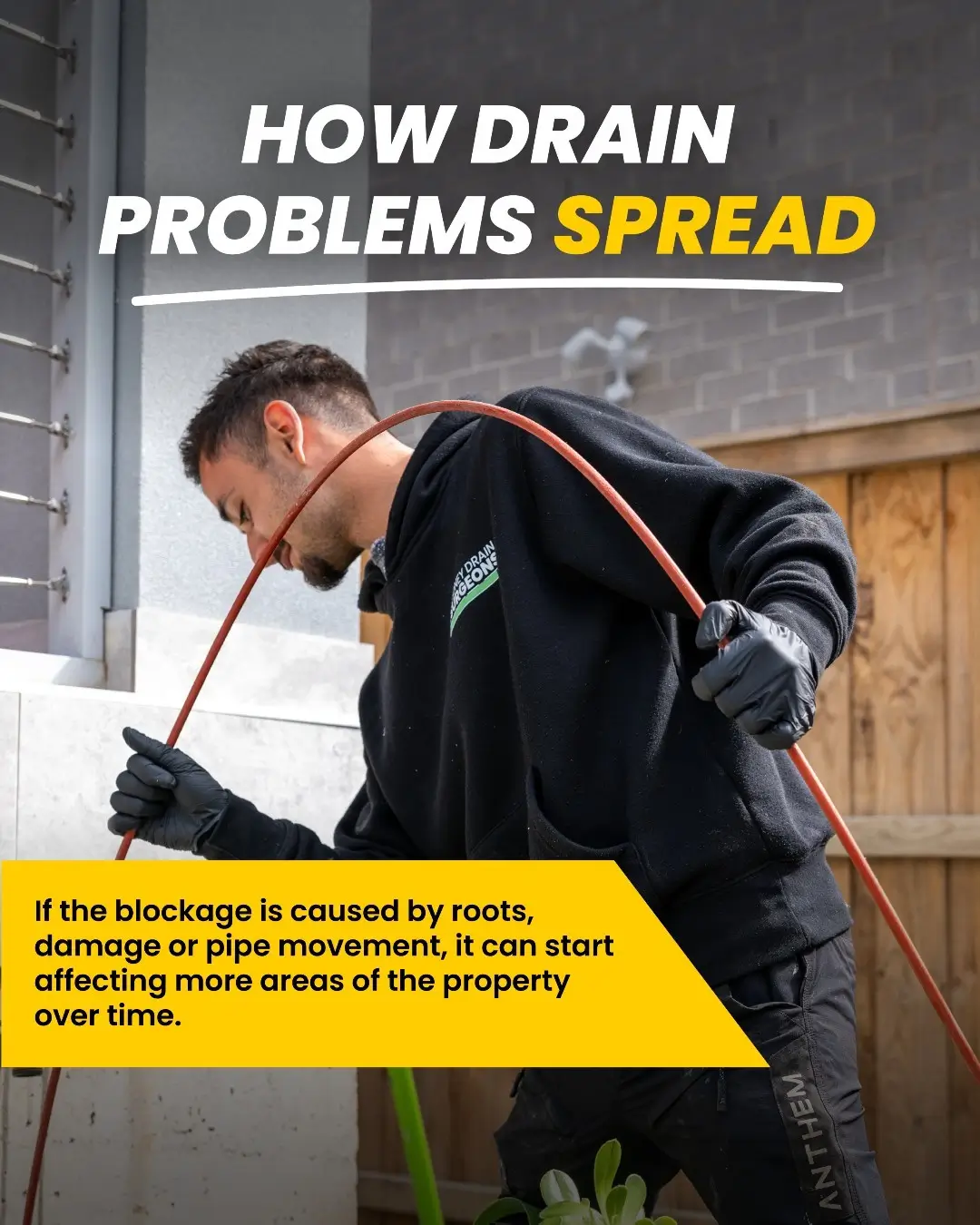
How drain problems spread
A partial blockage slows the flow of water. Slower flow means solids settle instead of travelling on, and that settled debris makes the blockage worse. Add roots or a cracked pipe, and you have a cycle that feeds itself:
In the worst cases, the pipe can crack, shift or collapse. At that point you're no longer looking at a drain clean. You're looking at a structural repair.
This is why a single slow drain is worth a second look. It's a bit like a cough that never quite goes away: probably harmless, but worth getting checked.
Call a plumber sooner rather than later if you notice any of these alongside your blocked drain:
If you're seeing two or more of these, treat it as urgent.
Some blockages are fine for a DIY attempt. Here's what's reasonable to try:
A good rule of thumb: if the same drain blocks twice in a month, it's time for a professional drain inspection in Sydney.
Guessing at the cause of a blockage can lead to wasted money and repeated call-outs. A professional drain inspection removes the guesswork.
A CCTV drain inspection uses a high-definition, waterproof camera on a flexible cable that is fed into your pipes. As it travels along, it sends live video to a monitor, so your plumber can see:
You also get to see the footage yourself, which means you can make a decision based on evidence rather than a guess. If you've ever been given a quote that felt vague, you'll understand why that matters.
You can read more about the process on the Sydney Drain Surgeons CCTV drain camera inspections page.
Once you know what's causing the problem, there are generally three paths:
For a simple clog, high-pressure water jetting can clear the line and flush out build-up. It's fast, effective and doesn't damage sound pipes.
If roots are the culprit, specialised cutting tools can remove them from inside the pipe. This clears the blockage, but if the pipe is cracked, the roots can return. That's why a lasting fix often needs the entry points sealed.
If the pipe itself is damaged, you can choose between:
A little prevention goes a long way. Here's how to keep your drains running smoothly:
Usually because the blockage is in that fixture's own branch line, such as hair in a shower or grease in a kitchen sink. If the same drain keeps blocking, though, it can point to a crack, roots or a poorly graded pipe.
Not always. But if you notice sewage smells, overflowing water, or multiple drains slowing down together, call a plumber promptly.
If several fixtures are slow at once, you hear gurgling, or water backs up when you use another fixture, the main line is the likely culprit. A CCTV drain inspection will confirm it.
In general, property owners are responsible for the pipes within their property boundary, while Sydney Water looks after the larger network, including mains in the street. If you're unsure where the problem sits, a plumber can inspect the line and advise you.
There's no single rule, but older homes, properties with mature trees, or homes that have had repeated blockages are good candidates for a professional drain inspection every few years.
A single blocked drain might be nothing more than a clump of hair. Or it might be your pipes quietly telling you something. The only way to know for sure is to look inside.
If you're dealing with a blocked drain in Sydney, the team at Sydney Drain Surgeons can find the cause and fix it properly, with no unnecessary digging.
Call (02) 9158 3564 for a free drain inspection quote, or book online today.