
Everyday Habits That Damage Your Drains

Est. Reading: 3 minutes

Everyday habits like pouring oil down the sink or rinsing hair down the drain slowly narrow your pipes. Here are the habits quietly damaging your drains around Sydney homes.

Key takeaways / Quick Answer

Pouring fat down the sink, using harsh chemical cleaners, flushing wipes or hygiene products, letting hair wash down the shower drain, and ignoring slow drainage are among the most common everyday habits quietly damaging your pipes. Left unchecked, these habits often lead to the kind of stubborn blockage that needs a professional blocked drain plumber to properly fix the problem.

Most of us don't think twice about what goes down our drains day to day. A bit of leftover cooking oil here, a quick rinse of the hairbrush there none of it feels like a big deal in the moment. But drains have long memories. Every one of these small, everyday habits adds up, slowly narrowing your pipes and setting the stage for a blockage that seems to come out of nowhere.

Let's walk through the everyday habits that are quietly wearing down your plumbing.
Everyday habits that damage your drains

Everyday habits that damage your drains

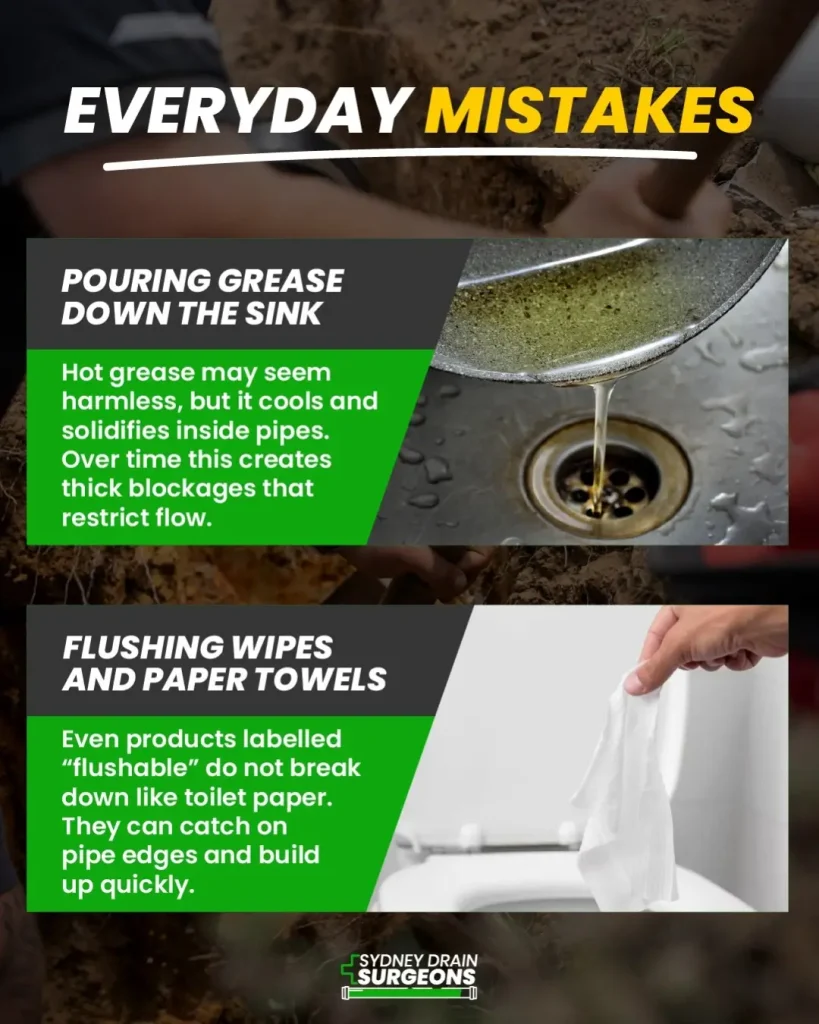
1. Pouring Fat, Oil, and Grease Down the Sink

This is the single biggest culprit we see. Fat might be liquid when it's hot, but it solidifies as it cools inside your pipes, gradually coating the walls and trapping everything else that follows it down the drain.

2. Relying on Chemical Drain Cleaners

It's tempting to reach for a bottle of drain cleaner at the first sign of a slow drain, but these products can do more harm than good, particularly with Sydney's mix of older homes and original pipework. The heat generated by these chemical reactions can weaken pipe walls over time, all while doing little to address the actual cause of a recurring blockage.

3. Washing Hair Down the Shower Drain

Hair is one of the most common causes of shower and bathroom sink blockages. It tangles easily, catches other debris like soap scum, and builds into a stubborn clog that often needs physical removal rather than a quick rinse.
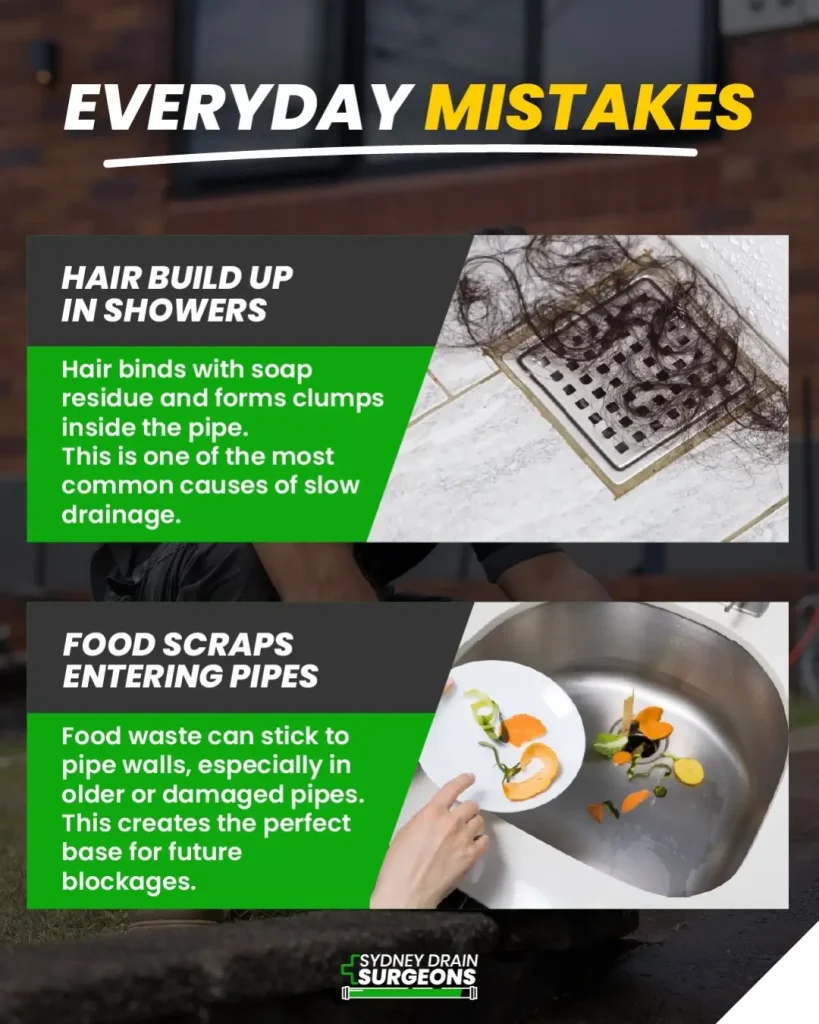
4. Flushing Wipes and Paper Towels

Even products labelled "flushable" often don't break down the way toilet paper does. Over time, these items can snag on pipe joints or tree roots, contributing to blockages further down the line.

5. Ignoring Slow-Draining Water

A slow drain is rarely a coincidence. It's usually the earliest sign of a developing blockage. Ignoring it (rather than investigating) just gives the problem more time to get worse.

6. Planting Trees Too Close to Sewer Lines

It's an easy thing to overlook when landscaping, but tree roots are drawn to the moisture inside underground pipes and can grow into even small cracks, eventually causing significant blockages or pipe damage.

7. Using the Toilet as a Bin

Cotton buds, dental floss, and other small items might seem harmless to flush, but they don't break down like toilet paper and can contribute to blockages over time, particularly in combination with other debris.

8. Skipping Regular Drain Maintenance

Many homeowners only think about their drains when something goes wrong. But regular checks for older homes can catch early warning signs of wear, root intrusion, or minor blockages before they escalate into an emergency.

The Real Cost of Ignoring These Habits

Letting these habits continue unchecked doesn't just risk the occasional slow drain. It can lead to genuinely serious plumbing problems, including:

  • Recurring blockages that keep coming back no matter how often you clear them
  • Pipe corrosion from repeated chemical cleaner use
  • Sewage backing up into sinks, showers, or toilets
  • Cracked or collapsed pipes from root intrusion or age-related wear
  • Costly water damage to floors, walls, or foundations if a blockage or leak goes unnoticed

Catching these problems early with a proper blocked sink repair or drain assessment is almost always cheaper and less disruptive than waiting for a full-blown plumbing emergency.

Actionable Tips to Protect Your Drains

  • Let fat and oil cool before binning it and never pour it down the sink, even in small amounts.
  • Use a hair catcher in the shower to stop hair from building up in your pipes.
  • Only flush toilet paper or everything else, including "flushable" wipes, belongs in the bin.
  • Avoid chemical drain cleaners, you should opt for gentler alternatives or call a professional for persistent blockages.
  • Act on slow drains early rather than waiting for a full blockage to develop.
  • Be mindful of tree placement near sewer lines, and have established trees checked periodically.
  • Book a professional drain inspection every year or two, particularly for older Sydney homes with original pipework.

Protect Your Pipes Before They Become a Problem

Sydney Drain Surgeons is Sydney's trusted team for blocked drains, blocked sink repair, and pipe relining, offering accurate CCTV diagnostics and reliable service across homes and businesses throughout Sydney including emergency support when you need it most.

Get in touch with Sydney Drain Surgeons today for a fast, high-quality pipe solution, and 35-year guarantee. Book a plumber. 

In this blog

Most Frequently Asked Questions

How long does pipe relining last?
Professional pipe relining typically lasts 20-50 years, with many installations exceeding 50 years when properly maintained.
Is pipe relining cheaper than replacement?
Yes, pipe relining is significantly more affordable than traditional excavation and replacement, often costing 30-50% less when you factor in restoration costs.
How long does the pipe relining process take?
Most pipe relining jobs are completed within one day, though complex projects may require additional time.
Will pipe relining work for my property?
Pipe relining is suitable for most residential and commercial properties. Our CCTV inspection will determine if your pipes are good candidates for relining.
Do you offer warranties on pipe relining Sydney services?
Yes, we provide a lifetime guarantee on all our pipe relining work, plus free drain camera inspections for 2 years.

What types of pipes can be relined ?
Pipes made of any material can be relined including PVC, Copper, Cast Iron, Clay and concrete.

What are the signs of a blocked drain?
The signs of a blocked drain are as follows :
-Foul Smell
-Water overflow
-Gurgling noise
-Slow draining of water
What are the causes of blocked drain?
The most common causes of blocked drains are :
-Tree roots
-Sanitary products
-Oil & Grease
-Mineral, soap or dirt build-up

What Makes us different 

Sydney drain surgeons
Free Quotes
Pipe relining Sydney
Honest Service
Pipe relining Sydney
No job too big
Sewer Drainage plumber
24/7 emergency
Sydney drain surgeons
Lifetime
guarantee
COVID Safe Work Ethics
COVID safe - PPE & COVID safe practices
Fast delivery
Same day, on time service guaranteed
Fully licensed & Insured business
Lifetime guaranteed work on all jobs
Real Reviews By Real People
Check them out online on Google or our Facebook!

Same day service guaranteed

When you book before 3:00pm

We repair drains & pipes in 3 easy steps

01

Drain inspection

02

Clear blockage

03

Reline pipe

Contact us for a free drain inspection quote

Book a plumber

Call us on 02 9158 3564 or complete the form below
POPUP
Sydney Drain Surgeons Logo
Google 5 star ratingCall us today for emergency services

02 9190 6765

24/7 emergency service
Copyright© 2026 Sydney Drain Surgeons. All Rights Reserved.
Services by
Media co Agency
clockcrossmenu