Is Pipe Relining Permanent?

Pipe relining is widely considered a permanent repair solution. When installed correctly using high-grade epoxy resin or CIPP (cured-in-place pipe) materials by qualified professionals, pipe relining Sydney installations are designed to last a minimum of 50 years, with many industry experts predicting effective lifespans of 80 to 100 years or more. The process creates a brand-new, seamless pipe inside your existing pipe! One that is stronger than the original, fully resistant to corrosion, and sealed against tree root infiltration. Unlike a patch or a temporary fix, no-dig or trenchless pipe relining addresses the structural failure of the pipe permanently, without excavating your property. It is the longest-lasting pipe repair solution available to Sydney homeowners today.

Key Takeaways

The Question Every Sydney Homeowner Asks Before Committing

You've just been told your drain is cracked, your sewer line has tree root infiltration, or your clay pipe is on the verge of collapse. The tradie mentions pipe relining as an option. It sounds brilliant, no digging up the garden, no jackhammering through the driveway, no week-long disruption to your household. But then the practical question surfaces:

"Is this actually a permanent fix, or am I going to be dealing with the same problem in five years?"

Pipe relining is not a temporary fix. It is a permanent pipe solution.

Industry standards across Australia indicate that properly installed pipe relining has a manufacturer-backed design life of 50 years or more, with real-world Sydney installations inspected via CCTV more than 20 years after relining showing negligible wear and zero failures. This isn't a patch. It's a new pipe inside your old one.

You can read our blog about why trenchless pipe relining is the smarter choice for modern plumbing and a permanent solution.

What Is Pipe Relining and Why Does It Last So Long?

Here's how a quality trenchless pipe relining repair Sydney job is carried out by the team at Sydney Drain Surgeons:

CCTV Drain Camera Inspection

The live footage is displayed on a monitor so you can see exactly what's happening inside your pipes, if there are cracks, root intrusion, joint displacement, corrosion, or collapse. It tells licensed plumbers where the damage is, how extensive it is, and which relining method is most appropriate. No accurate pipe relining can be planned without it, and any company that skips this step should raise immediate concern.

High-Pressure Hydro Jetting

Using high-pressure hydro jetting, a stream of water at up to 5,000 psi blasts away built-up grease, scale, mineral deposits, tree root debris, and any other material clinging to the pipe walls. Proper preparation here is what separates a 50-year reline from a 10-year one.

Epoxy Liner Preparation and Insertion

A flexible felt liner tube pre-impregnated with a two-part epoxy resin is measured and cut to the exact length of the damaged pipe section. The liner is inserted into the host pipe using a combination of air pressure and water inversion, ensuring it conforms perfectly. Premium epoxy resins cure to a smooth, jointless surface with exceptional structural integrity.

Curing Time

Once positioned, the liner is inflated against the host pipe walls and left to cure. Depending on the method used, curing may be accelerated using hot water, steam, or UV light. Once cured, the result is a CIPP (cured-in-place pipe), a seamless, corrosion-proof, root-resistant new pipe inside the old one.

Post-Relining CCTV Verification

Once curing is complete, the camera goes back in. Sydney Drain Surgeon conduct a final CCTV drain camera inspection to verify that the liner has cured uniformly. You receive documented video evidence of the completed repair. A transparency that no excavation-based pipe replacement typically provides. This post-reline inspection is included as standard in every Sydney Drain Surgeons job.

You See Everything We See

Sydney Drain Surgeons provides full CCTV footage. Both before and after every pipe relining job, so you have documented, visual evidence of your pipe condition and the completed repair. No guesswork, no hidden surprises. Just total transparency from start to finish. Read more here.

Epoxy Resin: The Material That Makes It Permanent

The epoxy resins used in quality pipe relining are thermoset polymers; once they cure, they don't soften, melt, or revert. Epoxy liner is:

When Is Pipe Relining NOT the Right Answer?

We believe in being straight with Sydney homeowners, and that means being honest about the situations where pipe relining isn't the right call. A trustworthy pipe relining company will tell you when excavation is the better option rather than recommending relining regardless of the situation.

Pipe relining may not be suitable in the following circumstances:

At Sydney Drain Surgeons, our pre-job CCTV drain camera inspection is specifically designed to identify these scenarios upfront. If we determine that excavation is the better option for your situation, we'll tell you and explain exactly why before quoting any relining work. Our reputation depends on giving you the right solution, not the most profitable one.

Contact Sydney’s Pipe Relining Specialists Today

Get your pipes permanently repaired by the local experts at Sydney Drain Surgeons. We use advanced, non-invasive technology to restore your plumbing system from the inside out, saving your lawn, your driveway, and your budget. All our advanced trenchless relining work is backed by an industry-leading 35-year workmanship warranty, guaranteeing a permanent and long-lasting solution for your property.

Ready to see what’s happening inside your drains? Book a CCTV drain inspection today or call our friendly Sydney team on 02 9158 3564 for an upfront, fixed-price quote.

Signs Your Pipes Are Ageing

Your household pipes may be in poor condition if you notice discoloured or foul-smelling water, reduced water pressure, damp patches on walls or ceilings, slow-draining fixtures, unexplained spikes in your water bill, or unusual gurgling noises from drains.

In Sydney, many homes were built before the 1980s with galvanised steel or clay sewer lines. These symptoms are common warning signs of ageing, cracked, or partially collapsed drain systems. A professional CCTV drain camera inspection is the most reliable way to confirm pipe condition and determine whether pipe relining or full pipe replacement is the right course of action.

 Key Takeaways: What You Need to Know

Why Pipe Condition Matters

Water damage from failing pipes is one of the leading causes of structural damage to Australian homes. According to the Insurance Council of Australia, water-related damage consistently ranks among the top home insurance claims year after year. In Sydney particularly, where a significant proportion of housing stock dates back to the mid-20th century or earlier, ageing pipe infrastructure is a silent threat lurking beneath the floors and inside the walls of thousands of homes.

The problem isn't just physical damage. Hidden leaks raise water bills, encourage mould growth, compromise structural timber, and, in the case of sewer line failures, create serious hygiene hazards. The good news is that modern solutions like trenchless pipe relining repair in Sydney mean you don't necessarily need expensive excavation to fix even severely damaged pipes. But the first step is knowing what to look for.

Common Signs Your Household Pipes May Be in Poor Condition

Here are the most important warning signs Sydney homeowners should never ignore.

Discoloured or Brown Water

Notice running brown, orange, or yellow water? It indicates that your taps are experiencing corroded galvanised steel pipes. Beyond being unsightly, rust-tainted water poses potential health risks and signals that your pipes are deteriorating from the inside out.

Low or Inconsistent Water Pressure

Multiple drops of water pressure throughout your home mean there is a mineral buildup, internal corrosion narrowing the pipe bore, or a partial pipe collapse restricting flow.

Unexplained Rise in Water Bills

If your water usage habits haven't changed but your bill has climbed, there's a strong chance water is escaping somewhere in your pipe system. Even a small, steady leak in a supply line can waste thousands of litres per month. Cross-reference your water meter reading with your bill, if usage doesn't add up, a hidden leak may be the culprit.

Slow-Draining Fixtures

The reason you have a slow drain is due to a localised blockage, such as hair, soap, or food waste. But when multiple fixtures fail at the same time, it indicates a partial blockage or collapse in the main sewer line. The culprit? Tree root intrusions are growing beneath your established gardens.

Sewage Smells Inside or Outside

A persistent smell of sewage, particularly noticeable near floor drains, in the laundry, or outside near your sewer line, is a serious red flag. There is a cracked sewer pipe, a failed pipe joint, or a partially collapsed drain allowing sewer gas to escape. It's a health hazard requiring prompt professional attention and very likely drain repair.

Damp Patches, Mould, or Peeling Paint

Moisture stains on ceilings or walls, paint that bubbles or peels without obvious cause, or mould appearing in areas that shouldn't be damp. All of these point to a concealed water leak.

Wet or Sunken Patches in the Garden

Persistent wet, spongy, or sunken areas in your lawn or garden, even when it hasn't rained? There’s a real possibility of an underground sewer or stormwater pipe leak beneath the surface.

Banging, Gurgling, or Rattling Pipes

Gurgling sounds from your drains after flushing or draining indicate trapped air in your pipe system. Banging or hammering sounds suggest pressure irregularities that stress pipe joints over time.

⚠️ Important: Experiencing more than two of these symptoms simultaneously is a strong indicator of systemic pipe deterioration not just a surface-level blockage. A professional CCTV drain camera inspection from Sydney Drain Surgeons will give you an HD picture of what's happening inside your pipes, with video footage you can see for yourself.When Should Pipes Be Replaced in a Home?

What About Clay and Terracotta Sewer Lines?

Over decades, ground movement, tree root pressure, and general soil settlement cause clay pipes to crack, shift at joints, and partially or fully collapse. When clay sewer lines fail, the results include persistent blockages, sewage odours, and, in severe casescollapsed drain repair work requiring either excavation or modern trenchless pipe repair Sydney methods.

Pipe Material Typical Lifespan Common Failure Mode Risk Level at 30+ Years
Galvanised Steel 20–50 years Internal corrosion, narrowing bore, rust leaks High
Copper 50–70 years Pinhole leaks, pitting corrosion, joint failure Moderate
PVC / uPVC 50–80 years Joint cracking, root infiltration, UV brittleness Low
Clay / Terracotta 50–100 years Joint displacement, root infiltration, collapse Moderate–High
Cast Iron 75–100 years Internal corrosion, cracking, joint failure Moderate
Lead 100+ years Health risk — should be removed regardless of condition Replace Immediately

Lead Pipes: If your home was built before the 1930s, there is a possibility it still contains lead pipe sections, particularly in the internal supply lines. Lead pipes should be removed regardless of their apparent physical condition — lead leaching into drinking water poses serious, well-documented health risks. Contact Sydney Drain Surgeons immediately if you suspect lead pipes in your property.

Why Choose Sydney Drain Surgeons for a Professional Pipe Inspection?

When it comes to ageing pipes in Sydney, there's no shortage of plumbers who'll tell you what's wrong, but not every team has the specialist equipment, no-dig technology, and diagnostic expertise to give you a truly accurate picture and a genuine repair solution.

At Sydney Drain Surgeons, pipe diagnosis and relining are our speciality. Not a sideline. Here's why Sydney homeowners choose us when their pipes start showing their age:

CCTV Drain Camera Inspection

We send a live-feed camera through your drain system so you can see exactly what we see: cracks, root intrusion, joint failure, partial collapse, before we recommend any solution.

Trenchless Pipe Relining Sydney

Our no-dig pipe relining Sydney method restores your pipes from the inside without excavating your yard, driveway, or home. Less mess, less time, and lower total cost than traditional dig-and-replace.

Tree Root Specialists

Root infiltration is the number one cause of sewer line failure in your home. We remove roots, reline the affected pipe with an epoxy liner, and seal out future intrusion permanently.

Collapsed Drain Repair

For severely damaged or collapsed sections, our pipe drain repair specialists assess whether relining, pipe bursting, or targeted excavation is the most efficient solution for your specific situation.

Same-Day Emergency Response

Our Sydney team operates around the clock and responds to drain and pipe emergencies across the greater Sydney area— fast.

35-Year Relining Warranty

Our pipe relining work is backed by a 35-year product and workmanship warranty. You're not just fixing the problem. So, you're investing in a pipe system that outlasts most alternatives.

Transparent, Upfront Pricing

We provide clear, fixed quotes before beginning any work. No hidden charges, no surprise additions. You know exactly what you're paying for and why, every time.

Licensed & Fully Insured Plumbers

All our technicians are licensed plumbers operating under full public liability insurance. Every job complies with AS/NZS 3500 and Sydney Water requirements, with compliance certificates issued on completion.

Frequently Asked Questions

How do I know if my pipes need replacing?

The clearest signs that your pipes need professional attention include persistent discolouration in your water, reduced pressure across multiple fixtures, slow drains throughout the house, unexplained wet patches in your garden or damp on interior walls, sewage odours, or a water bill that's climbing without explanation.

Is discoloured water a sign of bad pipes?

In most cases, it is. Brown, orange, or yellow water is a telltale sign of rust inside your supply pipes, typically galvanised steel that has begun corroding internally. If discolouration is persistent, recurs regularly, or worsens over time, it is almost certainly coming from your own pipes and should be investigated professionally. Beyond the unpleasant appearance, water contaminated with rust and pipe debris is not something you want to consume or cook with.

Can pipes deteriorate without visible leaks?

Absolutely. Pipes deteriorate from the inside, and significant internal corrosion, narrowing of the pipe bore, and crack formation can all be present without a single visible drip reaching your floors or ceilings. By the time a leak becomes visible internally, the pipe has usually already been compromised for months or years.

How often should household pipes be inspected?

For homes under 20 years old with modern PVC or copper plumbing and no symptoms, every 5 years is a reasonable general guideline. For homes over 30 years old, particularly those with galvanised steel or original clay sewer lines, an inspection every 2–3 years is strongly recommended, or immediately if any of the warning signs described in this article appear.

Will insurance cover pipe repairs from wear and tear?

In most cases, standard home insurance does not cover gradual wear and tear or deterioration from age; it covers sudden and accidental events. Sydney Drain Surgeons can provide detailed written inspection reports and photos that help support insurance claims where applicable.

Don't Wait for a Crisis— Know Your Pipes Now!

At Sydney Drain Surgeons, we've spent years helping Sydney homeowners understand exactly what's happening inside their pipes. Not with vague diagnoses, but with live CCTV footage that shows you the actual condition of your drain system. And where problems exist, our no-dig method or trenchless pipe relining repair Sydney technology means you can fix them properly, without tearing up your property to do it.

Book your CCTV drain camera inspection today. Know your pipes. Protect your home.

How Much Does Pipe Relining Cost in 2026?

What Is Pipe Relining?

Pipe relining, also called cured-in-place pipe (CIPP) lining, is a trenchless technology used to repair damaged pipes from the inside, without digging them up. A flexible liner saturated with epoxy resin is inserted into the existing pipe, inflated against the pipe walls, and then cured (hardened) using UV light, steam, or ambient temperature. The result is a smooth, jointless "pipe within a pipe" that restores full flow and structural integrity.

The technique was developed in the UK in the 1970s and has since become the standard solution for repairing underground drainage, stormwater, and sewer pipes in residential, commercial, and civil infrastructure settings.

What problems does pipe relining fix?

Average Pipe Relining Costs in 2026

Pipe relining pricing in Australia has increased modestly over the past two years, driven by higher resin material costs, increased labour rates, and strong demand in major cities. Below are the current average ranges as of mid-2026.

General price ranges

Job Type    Typical Scope         Price Range (AUD)
Patch lining (short repair) 0.5–1.5 m section $800 – $2,000
Short residential reline 1–5 m $1,000 – $4,500
Standard residential drain 5–15 m $3,500 – $8,500
Full property sewer reline 15–30 m $7,000 – $15,000
Commercial/strata sewer 30–60 m+ $14,000 – $40,000+
Lateral (junction) lining Per junction $800 – $1,800 each
Pipe per linear metre $500 – $1,500 per m
Standard Residential Job (10 m) ~$5,500 – $7,500
Important Note

These are indicative ranges only. Your actual quote will depend on pipe diameter, access difficulty, the condition of the pipe, and your location. Always get 2–3 quotes from licensed plumbers before proceeding.

Price per linear metre, the standard unit

Most relining contractors price jobs by the linear metre once they've assessed your pipe via CCTV inspection. The per-metre rate typically sits between $500 and $1,500. Larger diameter pipes and more difficult access push the price toward the higher end. Some contractors add a minimum call-out fee (usually $300–$600) on top of the per-metre rate.

What Factors Affect Pipe Relining Cost?

No two pipe relining jobs are identical. Here's a detailed look at every factor that influences what you'll pay.

1. Pipe diameter

This is the single biggest cost driver. Larger pipes require more liner material, larger equipment, and more resin. A 100 mm (4 inch) drain pipe costs significantly less per metre to reline than a 300 mm sewer main.

2. Total length of the repair

While longer jobs cost more in total, the per-metre rate often decreases for longer runs since setup costs are spread over more metres. A 1 m patch repair carries a higher per-metre rate than a 20 m full-line reline.

3. Pipe condition and pre-work required

Pipes clogged with heavy root intrusion, scale buildup, or debris need to be high-pressure jet cleaned before relining can take place. This pre-cleaning typically costs $300–$800 and is sometimes included in the quote, sometimes charged separately. If the pipe has a partial collapse, mechanical cutting (robotic cutting) may be required to re-open the bore, adding further cost.

4. Access difficulty

Standard access via an existing cleanout is the cheapest scenario. If your pipe runs under a concrete slab, a paved driveway, landscaped gardens, or requires a new access point to be created, costs rise. In extreme cases, limited access may require specialist equipment.

5. Number of junctions and bends

Every junction (where a branch drain connects to the main pipe) requires a lateral cut-out after relining, typically performed by a robotic cutter. Each junction adds $600–$1,500 to the job. Tight bends also require specific liner formulations and may increase cost.

6. Pipe material

Clay, concrete, cast iron, PVC, and earthenware pipes all have different characteristics. Older clay or concrete pipes with irregular internal surfaces can require additional prep work. Some severely deteriorated pipes may not be suitable for relining at all and will require excavation.

7. Curing method

UV curing is generally faster and produces a stronger liner but may be priced at a slight premium over ambient-cure or steam-cure systems. For most residential jobs, the difference is not significant.

8. Location and travel

Metro areas in Sydney, Melbourne, and Brisbane generally have competitive pricing due to a high density of relining contractors. Regional and rural areas can attract travel surcharges and higher rates due to fewer local competitors.

9. Time of day / urgency

Emergency same-day or after-hours relining can carry a 30–50% premium. If the situation allows, scheduling during regular business hours will save money.

10. CCTV inspection cost

Before any relining can occur, a CCTV drain inspection is needed to assess the pipe's condition and measure the defect. This typically costs $250–$600 and is sometimes credited against the relining cost if you proceed with the same company.

Cost Breakdown by Pipe Size

Pipe diameter is the most predictable cost driver. Below are typical 2026 per-metre rates by diameter for standard residential and light commercial applications.

Pipe Diameter. Common Use     Cost Per Linear Metre    10 m Job Estimate
50 mm (2") Internal bathroom / kitchen waste $400 – $700 $4,000 – $7,000
75 mm (3") Internal stacks, vent pipes $450 – $750 $4,500 – $7,500
100 mm (4") Residential sewer / drain (most common) $500 – $900 $5,000 – $9,000
150 mm (6") House sewer main, stormwater $700 – $1,100 $7,000 – $11,000
225 mm (9") Commercial sewer / stormwater $900 – $1,400 $9,000 – $14,000
300 mm (12") Main sewer, civil drainage $1,200 – $1,800 $12,000 – $18,000
375–600 mm Civil / infrastructure $1,800 – $3,500+ POA
Pro Tip

The 100 mm diameter pipe is by far the most common in Australian residential properties. If you have a standard suburban home built before 2000, there's a very high chance your sewer and stormwater drains are 100 mm clay or PVC.

Pipe Relining vs. Pipe Replacement: Full Cost Comparison

When your plumber tells you a pipe needs work, you're usually presented with two options: reline it or replace it. This is one of the most important decisions you'll make — and it's worth understanding the full cost implications of both.

Pipe Relining

  • No excavation required
  • Completed in hours, not days
  • Garden, driveway, and landscaping preserved
  • Lower total cost in most scenarios
  • 50+ year lifespan of the new lining
  • Minimal disruption to household
  • No need for council permits (typically)
  • Resin liner is root-resistant and seamless

Pipe Replacement

  • Excavation destroys landscaping & surfaces
  • 2–5 day job is common
  • Costly reinstatement of concrete / pavers
  • Generally 3–5x more expensive in total
  • Potential council permits required
  • Major disruption — no toilet for days
  • Risk of hitting other services underground

Real cost comparison example

Cost Component     Pipe Relining      Pipe Replacement (Excavation)
CCTV inspection $400 $400
Jet cleaning / prep $500 $500
Relining / excavation & pipe $5,500 $8,000 – $12,000
Concrete/paving reinstatement $0 $2,000 – $6,000
Garden / turf reinstatement $0 $500 – $2,000
Council permits (if needed) $0 $200 – $800
Total Estimated Cost ~$6,400 $11,200 – $21,700

How to Save Money on Pipe Relining

1. Get multiple quotes but compare apples to apples

Getting 2–3 quotes is standard practice. However, make sure each quote covers the same scope of work. A $3,000 quote that excludes CCTV, jetting, and junction reinstatement may end up being more expensive than a $5,000 all-inclusive quote.

2. Don't delay as small problems become big ones

A minor crack or joint defect that costs $1,500 to patch reline today could become a fully collapsed section costing $15,000+ to excavate and replace if left for another two years. Address drainage issues early.

3. Bundle multiple repairs into one mobilisation

If you have two separate damaged sections, getting both done in the same day reduces the per-metre rate and eliminates a second callout fee. Ask your contractor about doing all necessary work at once.

4. Check your home insurance policy

Some home and contents insurance policies cover drainage damage caused by tree roots or ground movement. Review your PDS carefully and speak to your insurer before paying out of pocket. Policies differ significantly on this point.

5. Choose ambient cure where appropriate

UV curing is faster and stronger, but for standard residential applications, ambient-cure CIPP liners perform excellently and are priced lower. Ask your contractor if UV curing is actually necessary for your specific job.

6. Ask if the CCTV inspection is credited toward the job

Many reputable companies will waive or credit the CCTV inspection fee if you proceed with relining. Always ask upfront.

7. Use a licensed specialist, not a general plumber

While any licensed plumber can theoretically quote on pipe relining, companies that specialise in trenchless drainage typically have better equipment, more competitive material costs, and faster crews, often resulting in a better price and outcome than a generalist quoting it infrequently.

Conclusion: What to Do Next

Pipe relining in 2026 represents one of the most cost-effective and least disruptive ways to restore a damaged drain or sewer line. With prices ranging from around $800 for a short patch repair to $15,000+ for a full property sewer reline, the specific cost you face depends on your pipe size, the extent of damage, access conditions, and your location across Australia.

The key takeaways from this guide:

If you're in Sydney and need fast, affordable, expert pipe relining, there is one name that stands out.

Trust Sydney Drain Surgeons for Affordable, Effective Pipe Relining

Sydney Drain Surgeons are Sydney's trusted trenchless drainage specialists. With years of experience relining residential and commercial pipes across greater Sydney — from the Inner West to the Hills District and the Northern Beaches, we deliver fast, reliable, permanent results at genuinely competitive prices.

7 Blocked Drain Cleaning Myths Busted

Ever wondered why your drains are still acting up, despite everything you’ve thrown at them? You’ve tried the viral DIY hacks. You’ve tried the boiling water, the vinegar, and buying every miracle drain cleaner on the shelf, yet the water still won't budge.

It’s time to set the record straight and bust the most common plumbing myths once and for all. Discover the truth about DIY fixes and learn how to actually protect your pipes!

Why Drain Cleaning Myths Can Cost You

There is no shortage of “quick fixes” online. From boiling water tricks to chemical cleaners, many of these solutions promise fast results. Unfortunately, they often deliver short-term relief while making the underlying problem worse.

Professional and licensed plumbers consistently see damage caused by incorrect DIY methods, overuse of harsh chemicals, and ignored warning signs. The result is often more expensive repairs that could have been avoided.

Let’s break down the biggest misconceptions and set the record straight.

Myth #1: Flushable Wipes Are Safe

You’re wrong if you're thinking that flushable wipes can dissolve easily! What you can’t see is that they’ll build up over time, sticking to pipe walls and creating stubborn blockages that are difficult to remove.

Myth #2: Hot Water and Soap Prevent Grease Build-Up

Pouring hot water down the sink might seem like a good idea after cooking. The reality? Grease cools further down the pipe and solidifies, eventually causing serious clogs.

Myth #3: Chemical Drain Cleaners Are the Best Solution

Maybe you’ve searched for drain cleaner products, but do not skip the risks that come with them. Once you use them, they can corrode pipes and lead to bigger problems. They rarely remove the entire blockage. Chemicals are not safe; they're harmful to your health and the environment!

Myth #4: If Water Drains, There Is No Problem

A slow drain is easy to ignore. But here is the catch: slow drainage is often the first sign of a developing blockage that will worsen over time.

Myth #5: DIY Tools Work Just as Well as Professionals

Handheld drain snakes and plungers can help in minor cases. They usually only clear part of the blockage or push it further down the pipe.

Myth #6: A Slow Drain Will Fix Itself

Blockages are made of organic waste, hair, and grease. They don’t just disappear, and they will act like a magnet for more debris. Waiting only allows the clog to harden and grow. What starts as a $100 quick fix today can easily turn into a multi-thousand-dollar pipe replacement tomorrow if the pressure causes a burst or a backup.

Myth #7: Any Plumber Can Fix Drain Issues

Not all plumbers specialise in drainage systems. Complex blockages such as invasive tree roots or collapsed pipes require licensed blocked drain specialists.

You need a team that uses advanced tools, including CCTV drain cameras and high-pressure hydro-jets, to make sure that the problem is solved at the source, not just pushed further down the line

blocked drain real fixes

blocked drain real fixes

Stop Guessing and Start Fixing with Sydney Drain Surgeons

Blocked drain myths can lead to poor decisions, unnecessary stress, and costly repairs. While DIY solutions may seem convenient, they rarely solve the real problem. The truth is simple. Effective drain cleaning requires the right tools, expertise, and experience.

If you are dealing with a stubborn blockage or want to avoid future issues, it is time to call in the professionals. Fix it properly. Fix it once.

Contact Sydney Drain Surgeons today and get expert help from a trusted blocked drain plumber serving across Sydney.


Why Is My Drain Backing Up or Overflowing?

The reason behind your drains backing up or overflowing is that blockages are forming in your pipeline, such as hair, grease, soap scum, or tree roots growing inside your broken pipes. Severe overflows in multiple fixtures often indicate issues within the main sewer line, such as structural breaks or heavy buildup.  That’s why your kitchen sink, a bathroom floor waste, or an outdoor grate overflow and doesn't give you the best like it's supposed to.

Identifying the cause early allows you to choose a long-term fix, such as trenchless pipe repair in Sydney, rather than just paying for a temporary patch.

Let’s talk about the five most common reasons your drains are backing up or overflowing.

Common Reasons Your Drain Is Overflowing

Overflowing drains are usually caused by restricted flow. Something inside your pipes is stopping water from moving freely. Here are the most common causes.

Blocked Drain Lines

One of the most common causes of overflowing drains is the everyday waste building up inside your pipes over time. That grease from cooking, food scraps, soap residue, and hair you pour down the drain?  They stick to your pipe walls and slowly reduce the space for water to pass through.

At first, you may notice slow drainage. If ignored, it can become a complete blockage, eventually causing water to back up and spill over.

Tree Root Intrusion

When there is a broken pipe, there is a tree root growing under your drain and seeking moisture that is coming out. This is especially common in older homes in Sydney.

Roots are drawn to moisture and can enter tiny cracks in underground pipes. Once inside, they grow and spread, catching debris and creating stubborn blockages. It’s a serious issue that often requires professional trenchless pipe relining repair, which fixes pipes without digging up your yard.

Read more about our pipe relining solutions to tree root intrusions.

Damaged or Collapsed Pipes

Pipes can wear out over time. Age, ground movement, and poor installation can all cause cracks or even full collapses. So, when a pipe is damaged, water flow becomes restricted and debris collects quickly. This leads to recurring blockages and eventual overflow.

A licensed blocked drain specialist can inspect the pipes using advanced tools and recommend the best long-term solution.

Stormwater Overload

Heavy rain can overwhelm your drainage system. When stormwater drains fill up too quickly, they can push water and debris back through your pipes. This often causes outdoor drains to overflow and, in severe cases, water can enter your home.

That’s why Sydney Drain Surgeons always recommend having regular maintenance to help reduce the risk, especially during storm season.

Sewer Line Backups

This is one of the most serious causes of an overflowing drain. If the main sewer line is blocked, wastewater has nowhere to go. It backs up through your drains, often affecting multiple fixtures at once. This situation is not just unpleasant. It can pose health risks and needs urgent attention from a licensed plumber.

Final Thoughts

When it comes to your plumbing system, taking immediate action is essential if something goes wrong. You shouldn’t ignore those warning signs in your drains, especially when you experience an overflowing. It is often a sign of a deeper problem within your pipe.

No matter how simple the blockage is or a major sewer issue, acting early can save you time, stress, and money. If your drains are backing up or overflowing, it is time to call in the experts.

Get your plumbing back on track today with a trusted emergency blocked drain plumber who gets the job done right.

Is a Blocked Drain an Emergency?

You can say it’s an emergency when your blocked drains cause wastewater to back up into your home, multiple fixtures are clogging at once, or there is an active overflow of sewage. That’s the time you need a same-day plumber to repair drains immediately.

While a single slow sink is usually a minor issue, do not let your guard down because this small problem can be the start of your nightmare. It’s best if you fix it right away or let a licensed plumber do the job the right way.  For Sydney Drain Surgeons, we know that timing is everything. Acting fast doesn't just stop the smell. It prevents pipe collapses and avoids the need for major excavations.

Here is how to tell if your drainage problem is a simple fix or a high-priority emergency.

When a Blocked Drain is NOT an Emergency

Not every blockage is a cause for panic. If the issue is localised and manageable, you likely have time to monitor it.

Single Fixture Issues

If only one drain is slow, like a bathroom basin or shower, the clog is usually close to the surface and non-urgent. You can fix it yourself.

Minor Clogs

Hair buildup in the shower or a small kitchen sink clog that hasn't overflowed. You can use strain to stop hair debris from getting down in your drains.

Simple DIY Success

If a gentle plunge or clearing the sink trap restores flow, you’ve likely caught it early.

When It Becomes an Emergency

These situations qualify as emergency blocked drains and require professional attention!

Sewage or Wastewater Backing Up

If you see that the water is rising into your bathtub or toilets, stop using all water immediately. This is a significant health risk and can lead to rapid structural damage and mould growth.

Multiple Drains Are Blocked

You get frustrated with your toilet, shower, and kitchen sink that are struggling at once. The main reason is blockage is likely in the main sewer line. Warning signs include gurgling sounds throughout the house or water rising in outdoor floor drains.

Heavy Rain and Stormwater Overload

Sydney’s sudden downpours can overwhelm damaged pipes. If your yard is flooding or your drains are overflowing during a storm, you need blocked drain clearing services in Sydney fast to prevent foundation damage.

Major Leaks and Pipe Bursts

A blockage can create immense pressure within your plumbing system. If a pipe cracks or bursts due to a clog, you'll see damp patches on walls, pooling water, or a sudden drop in water pressure. This requires an immediate shut-off and expert repair to avoid a massive water bill and property damage.

How the Professional Plumber Fixed Blocked Drains

While many homeowners reach for a plunger at the first sign of trouble, those are designed for minor blockages only. A plunger cannot reach the deep-seated clogs that truly threaten your plumbing system.

When you call a professional blocked drain specialist in Sydney, we use a multi-step surgical approach to make sure that the problem is gone for good:

CCTV Drain Inspection

Licensed and professional plumbers don’t guess the problem; we see. By sending a high-definition CCTV drain camera deep into your pipes, we identify the exact cause of the blockage. You can check the drains under and see the real-life footage of tree roots, a buildup of cooking fats, or a collapsed pipe section.

High-Pressure Hydro Jetting

This is the gold standard for clearing drains. Unlike a plumber's snake that just pokes a hole through the mess, hydro jetting strongly blasts water to scrub the pipe walls clean, removing years of debris and grease.

Precision Root Cutting

If your pipes are struggling because of root infestation, we use specialised mechanical cutters to slice through woody roots, restoring full flow immediately.

Long-Term Pipe Relining

If the inspection reveals a cracked or broken pipe, we can fix it without digging up your yard. Our trenchless pipe repair solution creates a new, permanent pipe inside the old one, sealing off entry points for future tree roots. It can last for 50 more years!

The Professional Advantage: A plunger pushes the problem further down the line; a professional plumber removes it entirely. By choosing expert clearing blocked drains from Sydney Drain Surgeons, you protect your home from the risk of recurring emergencies and costly repairs.

Final Verdict: Should You Call Now?

The rule of thumb is simple: If it’s slow and isolated, monitor it. If it’s backing up, overflowing, or affecting the whole house, it’s an emergency. Need help right now?

Contact Sydney Drain Surgeons for fast, reliable help with emergency blocked drains. We fix it early, fix it properly, and save you the stress.


What Are the Signs of a Blocked Drain?

When your drain starts to act strangely at the most unexpected time. You know you have a blocked drain problem if there is water pooling in sinks, strange gurgling sounds in your pipes, a persistent leak, or unpleasant odours coming from your drains. While these symptoms often start as minor inconveniences, they are your plumbing system’s early warning signals that a deeper issue is developing.

Ignoring a slow-draining shower or a glugging toilet can quickly lead to wastewater backing up into your home, resulting in a messy and expensive situation that requires an immediate emergency blocked drain plumber. That’s why Sydney Drain Surgeons team recommends acting as soon as you notice a change in your drainage flow. Early detection allows for simple solutions like hydro jetting, whereas waiting until an overflow occurs can lead to pipe collapses or structural water damage.

Here is exactly what you should look for to catch a blockage before it becomes a disaster.

Key Warning Signs of a Blocked Drain

Recognising these early can help you avoid the need for major blocked drain repair in Sydney and prevent expensive emergency callouts.

Slow Drainage

The first common sign is that the drains are taking longer to empty or water starts to pool around our feet, which means there is a buildup of grease, hair, or debris narrowing your pipes, making it hard to drain.

Unpleasant Odours from Drains

You cannot take the foul smell near your sinks or laundry as a sign of blocked drains. The reason behind those is the waste trapped and decomposing inside the pipe.

Gurgling Noises

Do your pipes give a sign to you? Once you hear strange gurgling or bubbling sounds after you flush the toilet or run the tap mean air is trapped behind a clog.

Water Backup

If water flows back into your sink or bathtub while you are using a different fixture like the washing machine, your main sewer line is likely blocked.

Rising Water Levels in the Toilet

Is your toilet bowl rising higher than normal after a flush? Or experiencing an overflow? That indicates you have a serious case of blockage that needs immediate attention.

Overflowing Drains

Seeing water spill out of your outdoor gully or floor waste is a clear sign that wastewater has nowhere else to go. This is a high-priority health risk.

Damp Patches

Have you noticed soggy spots in your yard or damp patches on your walls? This often means that a blockage has caused an underground pipe to crack or leak, potentially requiring trenchless pipe repair.

Don't wait for the overflow. If you notice even one of these signs, a quick CCTV drain camera inspection can find the problem while it’s still a simple, low-cost fix!

Final Word

Blocked drains always give warning signs. All you need to know is what to look for. Recognise those key warning signs like slow drainage, smells, strange noises, and backups, as your plumbing system’s way of telling you something is wrong. The sooner you act, the easier the fix.

Every emergency plumbing situation needs a licensed and fully-qualified plumber to repair blocked drains. Not just guessing what's under the surface. It needs to be accurate and exact to suggest a solution needed for your drainage system.

If you notice any of these signs, contact Sydney Drain Surgeons today and get fast help from a trusted licensed blocked drain specialist.


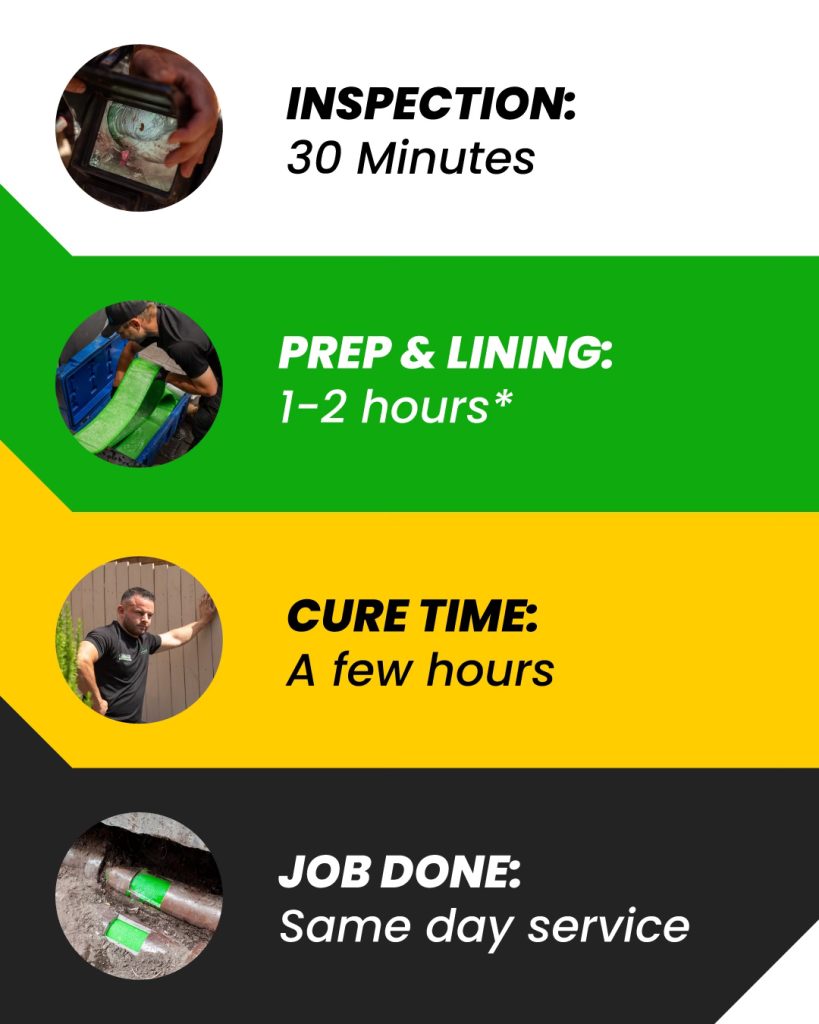
How Does the Pipe Relining Process Work?

No dig pipe relining starts with a CCTV drain camera inspection, where we send a tiny camera into your pipe to find the real culprit. Once we’ve pinpointed the trouble, we give the pipe a deep clean using high-pressure water jetting to clear a smooth path.

Next, we take a flexible, custom-measured liner, saturate it with a high-strength epoxy resin, and slide it right into your existing pipe through a simple access point. After a few hours of curing and hardening, that resin transforms into a rock-solid, jointless pipe within a pipe. We finish with one last camera check to prove the structural integrity is 100% restored.

For a more detailed explanation, here’s how our pipe relining process works, step by step.

pipe relining services before and after

pipe relining services before and after

Step 1: Inspection and Cleaning (30–60 Minutes)

The first step is a CCTV drain camera inspection to check your drains from the inside. We insert a high-definition camera through the pipe to pinpoint the exact location of the damage and assess how bad is your drain problem.

Once our licensed Sydney plumbers identify the cause of the blockage, we thoroughly clean the pipe using high-pressure water jetting. This helps to clear out any debris, sludge, or stubborn tree roots, creating a perfectly clean surface for the new lining.

Time: 15 to 30 mins for the inspection; 30 mins for the jetting, depending on how stubborn those roots are.

Step 2: Measuring and Preparing the Liner (20–30 Minutes)

Now that the path is clear, our plumbers take precise measurements to make sure that we make a custom fit for your specific drainage system. We then prepare a flexible, felt-based liner and saturate it with a high-strength, durable epoxy resin. This liner is designed to match the exact shape and size of your pipe, which is essential for a long-lasting repair.

Time: About 20 to 30 mins to get the liner prepped and ready.

Step 3: Inserting and Curing the Liner (2–4 Hours)

This is where the transformation happens without a single shovel hitting your garden or as we call it trenchless pipe relining. The resin-saturated liner is carefully inserted into the pipe through an existing access point, like a simple drain opening.

Now, we let it cure or harden. As the epoxy resin sets, it literally forms a brand-new, jointless pipe inside the old one. This new structure isn't just a patch, but a smooth, rock-solid, and incredibly strong barrier that is naturally resistant to future tree root intrusions and cracks.

Time: Insertion takes about 30 mins, but the curing process usually takes 2 to 4 hours, depending on the weather and the type of resin used.

Step 4: Final Testing and Quality Check (30 minutes)

Once the new pipe has fully cured, we perform a final CCTV drain camera inspection. This allows us to verify that the lining is perfectly smooth, properly bonded, and that your pipe’s structural integrity is 100% restored.

Time: A quick 15 to 20 mins for the final quality check, and show you the after footage so you can see the seamless, root-proof finish for yourself. Then we pack up, leaving your garden exactly how we found it!

Pipe relining process duration sydney

Pipe Relining Process Sydney

What is Trenchless Pipe Relining Solution?

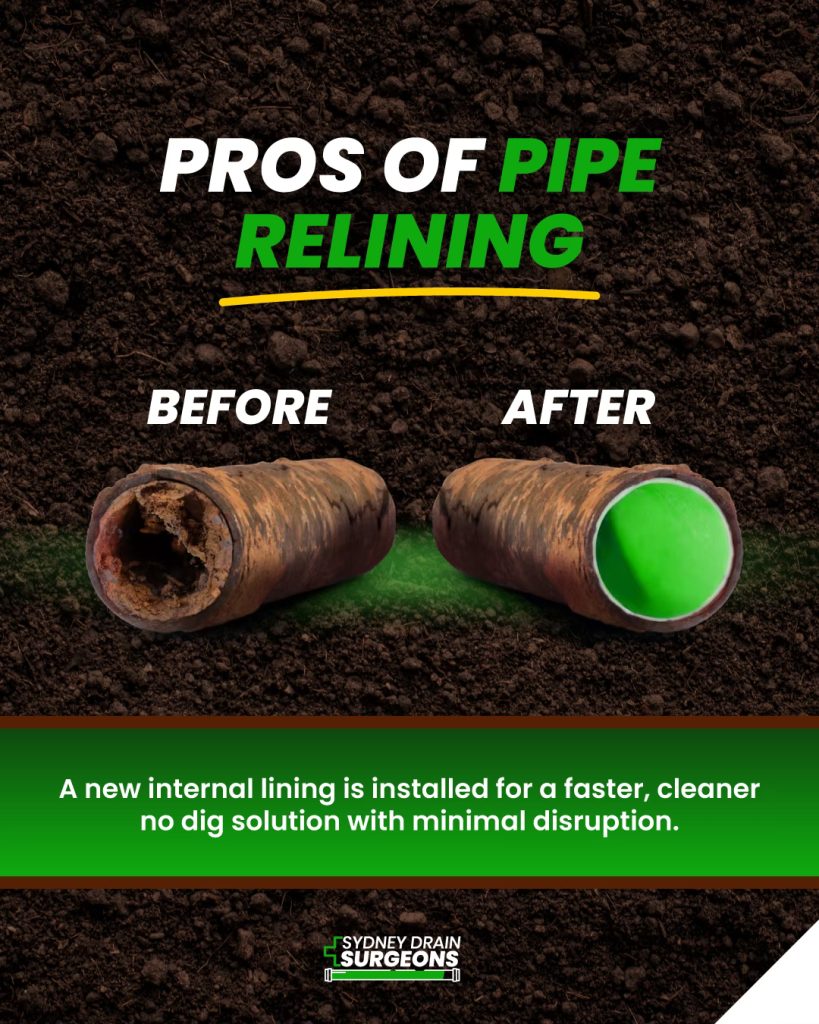
Pipe relining works by creating a new pipe inside the existing one. A new internal lining is installed for a faster, cleaner, no-dig solution with minimal disruption to your homes and business property.

With high-quality materials and expert installation, pipe relining can last more than 50 years! This makes it one of the most reliable solutions available for long-term pipe repair.

You don’t have to worry anymore about your newly made-up landscapes, because our trenchless pipe relining repair guarantees a stress-free experience with no excavation necessary to fix your stubborn blockages!

Conclusion

Pipe relining has changed the way plumbing problems are solved. It is fast, clean, and built to last. If you are dealing with damaged pipes or recurring blockages, pipe relining takes no more or less than 4-6 hours, which means you can keep your day going as usual without the stress.

Ready to fix your pipes without the mess? Get in touch with Sydney Drain Surgeons today! Let’s get your plumbing back to 100% with a professional, seamless relining solution that saves you time and money.

Frequently Asked Questions About Pipe Relining (FAQs)

We know that pipe relining is a big investment. Here are the honest answers to the questions our Sydney customers ask us most.

How long does pipe relining actually last?

A professionally relined pipe is a set-and-forget solution. It is designed to last 50 years or more, often outlasting the original pipes themselves. It’s not a temporary patch, but a long-term structural overhaul.

Does pipe relining come with a guarantee?

Absolutely. At Sydney Drain Surgeons, we stand by our workmanship. We offer comprehensive warranties on our relining services, giving you total peace of mind that your drainage issues are a thing of the past.

What types of pipes can be relined?

The good news is that our technology is incredibly versatile. We can successfully reline almost all common pipe materials found in Sydney homes, including clay, PVC, cast iron, and concrete.

Can collapsed or broken pipes still be relined?

It depends on the severity. If a pipe has completely collapsed into itself, a traditional replacement might be necessary. However, many broken or cracked pipes can actually be saved with relining after a professional CCTV assessment.

Is pipe relining safe for my property?

Yes! Because there is zero excavation, your landscaping, driveways, and foundations are completely safe. It’s also an eco-friendly choice, as it prevents the waste and carbon footprint associated with heavy digging and machinery.


Trenchless Sewer Line Repair vs. Traditional Excavation: Which Method is Right for You?

When your sewer line fails, the last thing you want is a messy, expensive, and time-consuming repair in your newly made-up lawn. We know it’s stressful.

But with modern plumbing solutions today, you don’t need to think about digging. It offers a smarter solution. To start, homeowners can choose between trenchless sewer repair and traditional excavation.

Trenchless sewer repair is faster, less disruptive, and often more cost-effective in the long run. It is ideal for most residential properties, especially in urban areas like Sydney. While traditional excavation still has its place, particularly when pipes are severely damaged or collapsed.

But which one truly delivers better value, less stress, and long-term reliability? Let’s break it down in a clear, practical way so you can confidently choose the right solution for your property.

What Is Trenchless Sewer Repair?

Trenchless sewer repair or pipe relining is a modern method that fixes underground pipes without digging up your entire yard. So instead of digging up the entire pipe, licensed pipe relining plumbers access the pipe through small entry points and repair it from the inside. This approach uses advanced technology such as:

Cured In Place Pipelining

A flexible liner coated with resin is inserted into the damaged pipe and hardened, giving your old pipe a strong one and in a new life.

Pipe Bursting

The damaged pipe is broken apart while a new pipe is installed in its place at the same time.

Pipe Coating and Relining

Special coatings seal cracks and reinforce the pipe structure.

These methods are widely used in Sydney Drain Surgeons' trenchless pipe repair services, which deliver long-lasting results without the chaos of excavation.

What Is Traditional Excavation?

When it comes to traditional excavation, it requires digging a trench along the entire sewer line to expose and replace the damaged pipe. To warn you, it’s messy as it is. The process often includes:

While effective, it is far more invasive and can significantly disrupt your home and outdoor space.

Trenchless Sewer Repair vs. Traditional Repair

To further introduce you to this modern plumbing solution, which plumbers use today. Let’s take a quick look at their strengths and limitations when it comes to trenchless repair vs. the traditional one.

Trenchless Sewer Repair: The Modern Solution

Trenchless technology or pipe relining is the go-to for Sydney homeowners who want to fix the problem without turning their front yard into a construction site.

The Advantages:

The Disadvantages:

Traditional Excavation: The Heavy-Duty Route

Sometimes, there is no way around it, but you have to get into the ground.

The Advantages:

The Disadvantages:

Sewer Repair with Minimal Disruption

One of the biggest reasons homeowners choose trenchless repair is simple. It protects your property.

Instead of digging up your garden, driveway, or outdoor living area, trenchless methods keep everything intact. This is especially important in Sydney, where outdoor spaces add real value to your home. If you want to avoid turning your yard into a construction site, trenchless repair is the clear winner.

You can read our blog about the trenchless method: advantages and disadvantages. To help you with your sewer line repair.

Cost Comparison of Trenchless Repair vs. Traditional

At first glance, traditional excavation may seem cheaper. However, that is rarely the full story.   Once you factor in the cost of restoring your lawn, driveway, or landscaping, traditional methods can quickly become more expensive.

Time Efficiency

This means that less time means less disruption and lower labour costs. It can save you time and your wallet.

Environmental Impact

Long-Term Durability

Trenchless repairs are designed to last. Many systems have a lifespan of 50 years or more.  They are also resistant to tree root intrusions, corrosion, and leaks. This makes them a reliable long-term investment. Read more.

Trenchless vs. Traditional: Which Is Better?

The answer depends on your situation, but here is a simple guide.

Choose trenchless sewer repair if:

Choose traditional excavation if:

For most homes, especially in built-up areas, trenchless repair offers the best balance of speed, cost, and convenience.

Why Sydney Homeowners Trust Sydney Drain Surgeons

When it comes to sewer line replacement in Sydney, choosing the right team matters just as much as choosing the right method. Sydney Drain Surgeons specialises in advanced trenchless sewer repair solutions designed for modern homes.

Family Owned and Operated

You get personalised service with a strong focus on quality and customer care.

25 Plus Years of Experience

Our team has handled everything from simple blockages to complex pipe failures.

Care and Ownership

Every job is completed with attention to detail and long-term results in mind. Sydney Drain Surgeons' professional trenchless pipe repair guarantees that your sewer system is fixed efficiently and built to last.

Make the Smart Choice

Dealing with a damaged sewer line can feel overwhelming, but the right solution makes all the difference. If you want a repair method that is fast, efficient, and minimally disruptive, trenchless sewer repair or pipe relining is the clear choice for most homeowners.

It saves time, protects your property, and delivers long-lasting results. Have you made up your mind between modern trenchless repair or just stick to the traditional one? Now is the time to act, trust Sydney Drain Surgeons' pipe relining and blocked drains specialist.

Your home deserves a solution that works smarter, not harder.


Emergency Blocked Drain Overflowing in Sydney: What to Do Right Now

A drain overflowing in your home or yard can quickly turn into a stressful situation. Seeing those waters spilling out of the sinks, toilets, or outdoor drains? That means there is a serious blockage somewhere in your plumbing system. Without a licensed plumber to address all these issues immediately, this could make things worse. It can cause water damage, unpleasant odours, and potential health hazards.

Sydney homes are particularly vulnerable to blocked and overflowing drains due to heavy rainfall, mature trees, and ageing underground pipes. The best things about 24/7 emergency plumbing services are that no matter the time or day, a team of expert plumbers can act quickly, minimise damage and restore your drainage system before the problem escalates. All you have to do is hit the call and ask a blocked drain plumber.

While the emergency plumber is on the way to your home, here’s a guide on what to do when a drain overflows.

What To Do Immediately When a Drain Overflows

If you notice water spilling out of a drain, taking the right steps immediately can help prevent further damage.

What To Do While the Emergency Plumber Is on the Way

Once you have contacted a plumber, there are a few things you can do to minimise damage and prepare for their arrival.

Why do Drains Start Overflowing in Your Sydney Homes

Drain overflows happen when water cannot move freely through pipes. When water builds up behind those blockages? All wastewater is forced back up through the nearest outlet.  Several common issues contribute to your drain, including:

Tree Roots in Underground Pipes

Many Sydney suburbs are lined with large trees. Roots start to invade your home because they naturally search for moisture and often find their way into underground sewer pipes. Once inside, roots grow rapidly and trap debris, eventually causing severe blockages.

Grease and Food Waste Buildup

Kitchen drains are a frequent source of problems. Those things you pour down the drain, including grease, oils, and food scraps, gradually harden and stick to the inside of pipes. Over time, they will start to build up and narrow the pipe until water flow is restricted.

Outdoor Debris in Stormwater Drains

When heavy rain arrives, the blocked drain cannot handle the water volume and begins to overflow. Leaves, dirt, and garden debris can block outdoor stormwater drains

Heavy Rain and Stormwater Pressure

Sydney storms can overwhelm drainage systems, especially if pipes are already partially blocked. Excess rainwater may force water back up through drains.

Damaged or Ageing Pipes

Older pipes made from clay or metal can crack, collapse, or corrode. These structural problems disrupt water flow and often lead to recurring blockages and overflows.

Immediate Risks of an Overflowing Drain

An overflowing drain is more than just an inconvenience. It can quickly create serious problems if not addressed. Some of the main risks include:

Because of these risks, it is important to respond quickly when a drain begins to overflow.

Drains Most Likely to Overflow in Homes

Certain drains tend to experience blockages more frequently than others.

Kitchen Sink Drains

Grease and food waste are the most common causes of kitchen drain blockages.

Bathroom Drains

Hair, soap residue, and hygiene products often clog bathroom pipes.

Toilets

Flushing wipes, paper towels, or other unsuitable items can cause toilet overflows.

Floor Drains

Floor drains connected to multiple pipes can overflow when the main drain becomes blocked.

Outdoor Stormwater Drains

These drains are easily clogged by leaves and debris, particularly during storms.

Can You Fix a Drain Overflow Yourself?

In some situations, minor blockages can be cleared using simple household tools.

Common DIY approaches include using a plunger, flushing the drain with hot water, or removing visible debris. However, these methods are only effective for small or minor blockages that simple home remedies can handle.

If the issue is caused by tree roots, collapsed pipes, or deep debris buildup, professional equipment such as CCTV drain cameras and high-pressure water jetting is required. Contact Sydney Drain Surgeons servicing Sydney-wide as a trusted and most relied pipe relining and blocked drain specialist!

When To Call an Emergency Plumber for Overflowing Drains

You should contact a professional plumber immediately if you notice:

These signs often indicate a serious obstruction in the main sewer line.

Who Is Responsible for an Overflowing Drain?

Responsibility usually depends on where the blockage occurs. Homeowners are generally responsible for drains located within their property boundaries. Public sewer lines and stormwater infrastructure are typically managed by local councils or water authorities. A professional plumber can inspect the system and determine where the problem lies.

Cleaning Up After a Drain Overflow

Once the overflow has been resolved, it is important to clean the affected area properly. Start by wearing protective gloves and removing standing water. Disinfect contaminated surfaces thoroughly to eliminate bacteria and odours. Ensure the area is completely dried to prevent mould growth. If sewage contamination has occurred, professional cleaning services may be necessary.

Will Insurance Cover Drain Overflow Damage?

Insurance coverage depends on the cause of the overflow and your specific policy. Some home insurance policies cover sudden plumbing failures that lead to water damage. However, issues caused by a lack of maintenance or long-term pipe deterioration may not be covered. Checking your policy or contacting your insurer will provide clarity.

Preventing Future Drain Overflows

Prevention is the best defense against drain emergencies. Simple habits can significantly reduce the risk of blockages.

Long-Term Solutions for Serious Drain Problems

If a drain overflow is caused by structural pipe damage, plumbers may recommend permanent repair solutions.

High-pressure drain cleaning can remove stubborn debris and tree roots. CCTV drain camera inspections allow plumbers to locate hidden issues within pipes. In many cases, pipe relining provides a modern repair method that restores damaged pipes without the need for extensive digging. These long-term solutions help your drainage system continue to operate reliably.

Act Quickly When a Drain Overflows

An overflowing drain is never something to ignore. What starts as a minor blockage can quickly escalate into property damage, unpleasant smells, and costly repairs.

Acting fast is the key to protecting your home! Stop using water, inspect the drain if it is safe to do so, and call a professional plumber if the problem continues.

With proper maintenance and timely repairs, Sydney homeowners can keep their drains flowing smoothly and avoid future plumbing emergencies.

For further queries about your drains, contact our professional blocked drain plumber today!