
Hydro jet drain cleaning uses a specialised hose to send controlled, high-pressure water through a pipe, flushing out grease, sludge, soap, scale and other build-up. It cleans more thoroughly than plunging or snaking, but it is not the right first step for every drain.
If a pipe is old, damaged, affected by tree roots or blocking again and again, a CCTV drain camera inspection should guide the next decision. Jetting cleans a pipe. It does not repair a crack, collapse or separated joint.
You clear the drain. It runs fine for a few days. Then the gurgling starts again.
If that sounds familiar, the blockage you removed may not have been the real problem. The grease, sludge or scale lining the pipe is still there, quietly waiting to catch the next load of waste. That is where hydro jet drain cleaning comes in. In this blog, we will explain to you the purpose of hydro jetting and how it works.
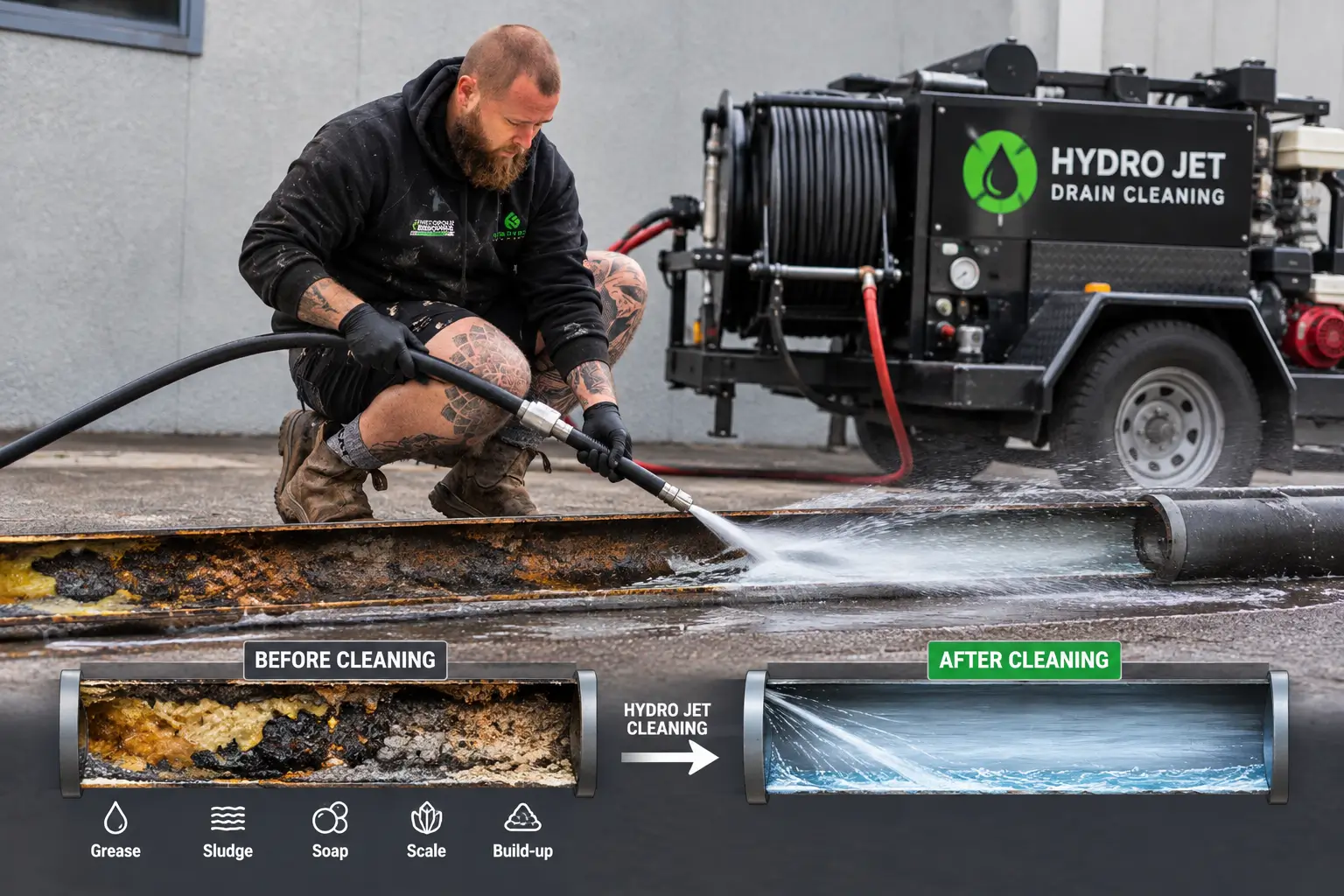
Hydro Jet Drain Cleaning Before and After
Hydro jetting, also called high-pressure water jetting, cleans drains with pressurised water rather than a mechanical cable or chemical cleaners. A plumber feeds a flexible hose with a specialised nozzle into the pipe, and the water scours the inside walls clean.
Think of it as the difference between poking a hole through a clogged pipe and actually washing the pipe out.
1. Assess the drain. The plumber checks the access point, pipe size and the likely cause of the blockage.
2. Feed in the hose. A flexible jetting hose is guided into the line.
3. Break through and scour. The nozzle sends water forwards to break through the obstruction and backwards to scrub the pipe walls, helping move loosened material towards the access point.
4. Flush and check. The line is flushed, and the plumber confirms that water is flowing freely. Where needed, a CCTV camera can confirm the result.
Different nozzles and pressure settings suit different pipe sizes, materials and blockage types. That is why pipe condition matters just as much as the blockage itself.
| Method | Best for | Limitation |
| Plunging | Minor, close-by blockages in sinks and toilets | Only reaches a short distance and leaves build-up behind |
| Drain snaking (cable) | A single clog or soft obstruction | Can punch a hole through the blockage without cleaning the pipe walls |
| Hydro jetting | Grease, sludge, soap, scale and build-up along a longer section of pipe | Not suited to every pipe, so damaged or fragile lines need assessing first |
Kitchen and commercial waste pipes collect cooking oils, fats and food residue. These can harden on the pipe walls. A plunger or cable may open a small channel, but the coating stays behind and keeps narrowing the pipe.
Bathroom, laundry and floor-waste lines gather soap residue, lint, dirt and grit. If the pipe is otherwise sound, a thorough water clean can restore better flow through the affected section.
Scale can gradually narrow the inside of a pipe and give waste something to snag on. Jetting can help remove it from suitable pipes.
If a drain blocks again soon after being cleared, leftover build-up may be catching new waste. Jetting can help, but recurring problems also deserve investigation so a hidden defect is not missed.
Cafés, restaurants, strata buildings and other businesses often have longer drain runs and heavier daily use than a typical home. Planned drain cleaning can catch build-up before it becomes an overflow. The right schedule depends on the site, usage and history, not a one-size-fits-all rule.
Every city has its drain quirks. In Sydney, a few common ones stand out:
None of this means every Sydney drain needs jetting. It does explain why a proper look inside the pipe is often worth it before choosing a cleaning method.
High-pressure cleaning should be chosen with care when a pipe may not be structurally sound. A CCTV drain inspection is especially useful when:
A camera shows whether the problem is build-up, roots, a damaged joint or a structural failure. If roots are involved, tree root removal from pipes may be needed before considering a longer-term repair.
Jetting is a cleaning method, not a repair. It may restore flow through a damaged line for a while, but a crack, collapse, separated joint or severe root intrusion can allow the problem to return.
Where the pipe is structurally suitable, no-dig pipe relining can create a new pipe inside the old one without digging up the whole run. The right option depends on the camera findings, access, pipe condition and the location of the defect.
Arrange an assessment promptly if you notice:
Keep people and pets away from contaminated wastewater, and avoid repeatedly flushing or running water into a line that is backing up. For an urgent overflow, contact our blocked drains and pipes team, or see our sewer blockage service. For a single slow fixture, our blocked sink and toilet service may be the right fit.
It depends on the blockage. A single soft clog may clear with a cable. For grease, sludge, soap or scale along the pipe walls, hydro jetting cleans more thoroughly.
On a sound pipe, with suitable pressure and the right nozzle, it is a standard cleaning method. The risk is higher with old, cracked or fragile pipes, which is why a camera inspection can be wise first.
It can help clear loose roots and debris in some cases. If roots have entered through a crack or joint, they can grow back, so root removal or a repair may also be needed.
There is no fixed rule. It depends on grease load, usage and the drain's history. A plumber can suggest a schedule after inspecting the site.
No. Jetting cleans the inside of a pipe. A crack, collapse or separated joint needs a repair solution such as relining or another suitable option.
A first-time, minor blockage may only need simple clearing. If the problem keeps returning, affects several fixtures or involves an older pipe, a camera inspection helps find the cause.
Hydro jetting is an effective way to clean a suitable pipe, especially where grease, sludge or scale is restricting flow. The safest approach is to find out what is inside the pipe, choose the right pressure and nozzle, then confirm that the line is clear. If a blockage keeps returning, ask for the underlying cause to be checked rather than relying on repeated temporary fixes.
Not sure what is going on? Try our Drain Problem Checker or call 02 9158 3564 (24/7 emergency service). Sydney Drain Surgeons services Sydney and Wollongong, so get in touch for practical advice and the right inspection or cleaning solution.